
- Audience: A2 level Italian language learners
- Responsibilities: Instructional Design, eLearning Development
- Tools used: Vyond
The Problem and the Solution
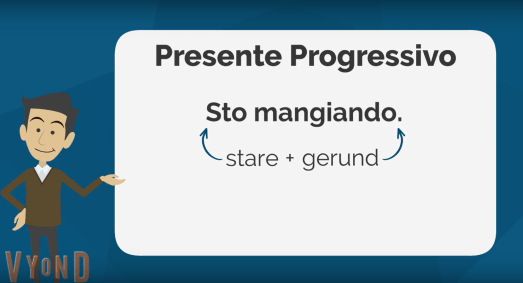
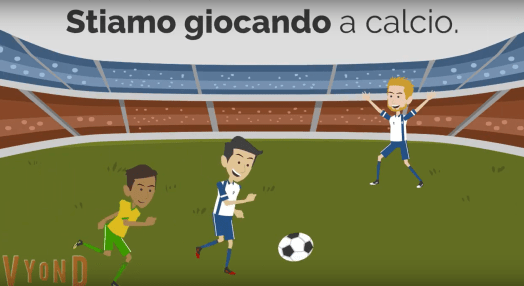
A common issue in learning verb tenses, such as the Italian presente progressivo, is students struggling to comprehend the uses and structure. To address this issue, a solution could be to create a microlearning video using Vyond. Microlearning offers students the flexibility to focus on the subjects they find most necessary, interesting, or where they have deficiencies. By utilizing Vyond, which provides visually engaging and interactive content, the microlearning video can present clear examples and step-by-step explanations. This approach helps students visually grasp the formation and usage of the presente progressivo, enhancing their understanding and retention of the topic.
The Process
First, I need to identify the specific objectives I want to achieve with the video. This means determining what I want students to learn, such as understanding how the tense is formed and used, recognizing common verbs in this tense, and practicing its application in different contexts.
Once I have my objectives, I can start writing the script. The script will serve as a guide for the video, outlining the content and ensuring clear explanations. It’s important to break down complex concepts into simpler explanations and include engaging examples and useful tips.
With the script ready, I can begin creating the video in Vyond. This platform allows me to customize animated characters, backgrounds, and props to match the content and enhance the learning experience.
One interesting challenge I encountered was using Vyond’s text-to-speech feature for both English and Italian dialogue. The AI struggled with accurate pronunciation in both languages. To solve this, I came up with a solution: using two sets of AI voices, one for English and one specifically designed for Italian. This ensures accurate pronunciation and a more authentic learning experience.
The Results
The implementation of the microlearning video on the Italian presente progressivo using Vyond yielded positive outcomes. The visually engaging and interactive nature of the video enhanced understanding of the verb tense and its structure. By utilizing separate AI voices for Italian and English, accurate pronunciation was ensured, contributing to effective language learning. The microlearning format allowed for a personalized learning experience, enabling learners to focus on specific areas of interest or need. Overall, the microlearning video using Vyond proved to be a successful tool in teaching the Italian presente progressivo, resulting in improved comprehension, pronunciation accuracy, and a tailored learning experience.
 Lauren Ackley